What should qualify a lead for a service business?
Use criteria the client can actually evaluate, such as the requested service, service area, timing and ability to meet the need. Avoid defining qualified simply as a form with a working phone number. Write down the agreed criteria and use examples so different people apply the same standard when updating the shared pipeline.
How do I distinguish contact attempts from a successful conversation?
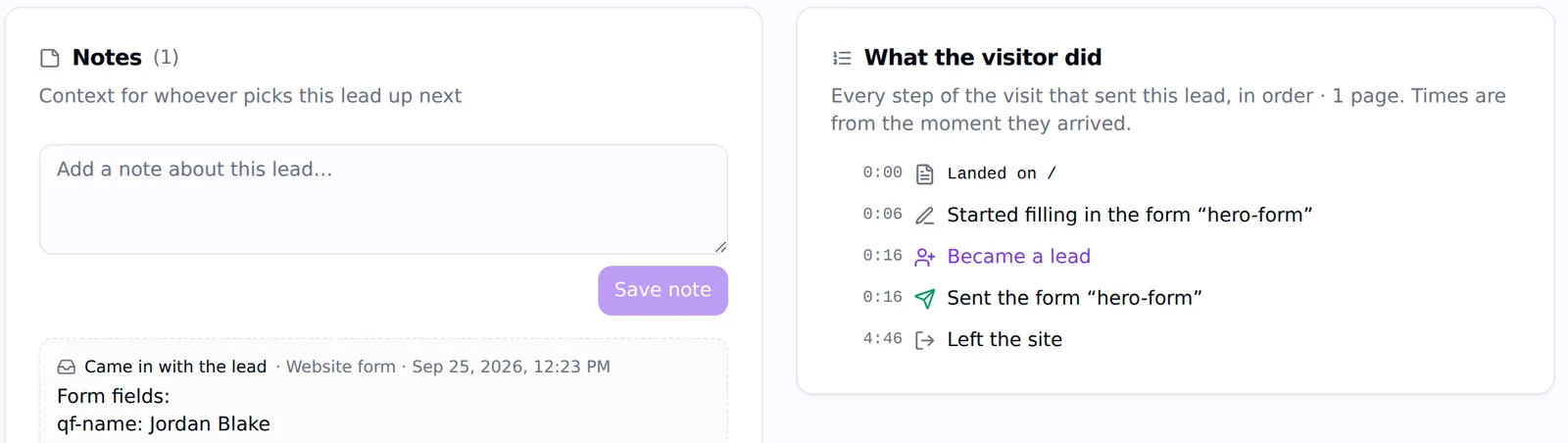
Record what happened in the lead note instead of relying on the stage alone. An unanswered callback and a completed needs discussion are different events even if both involve outreach. The next person should know whether they need to try again, prepare an estimate or follow up on an agreed decision.
What if the client does not update lead statuses?
Start with a smaller habit the client can sustain, such as reviewing new enquiries at a set time and recording sales as they close. Show why the updates change reporting quality. Until the records are complete, describe the missing outcomes clearly instead of assuming that every untouched lead was poor or every conversion was recorded.
Can I customize the pipeline stages for each client?
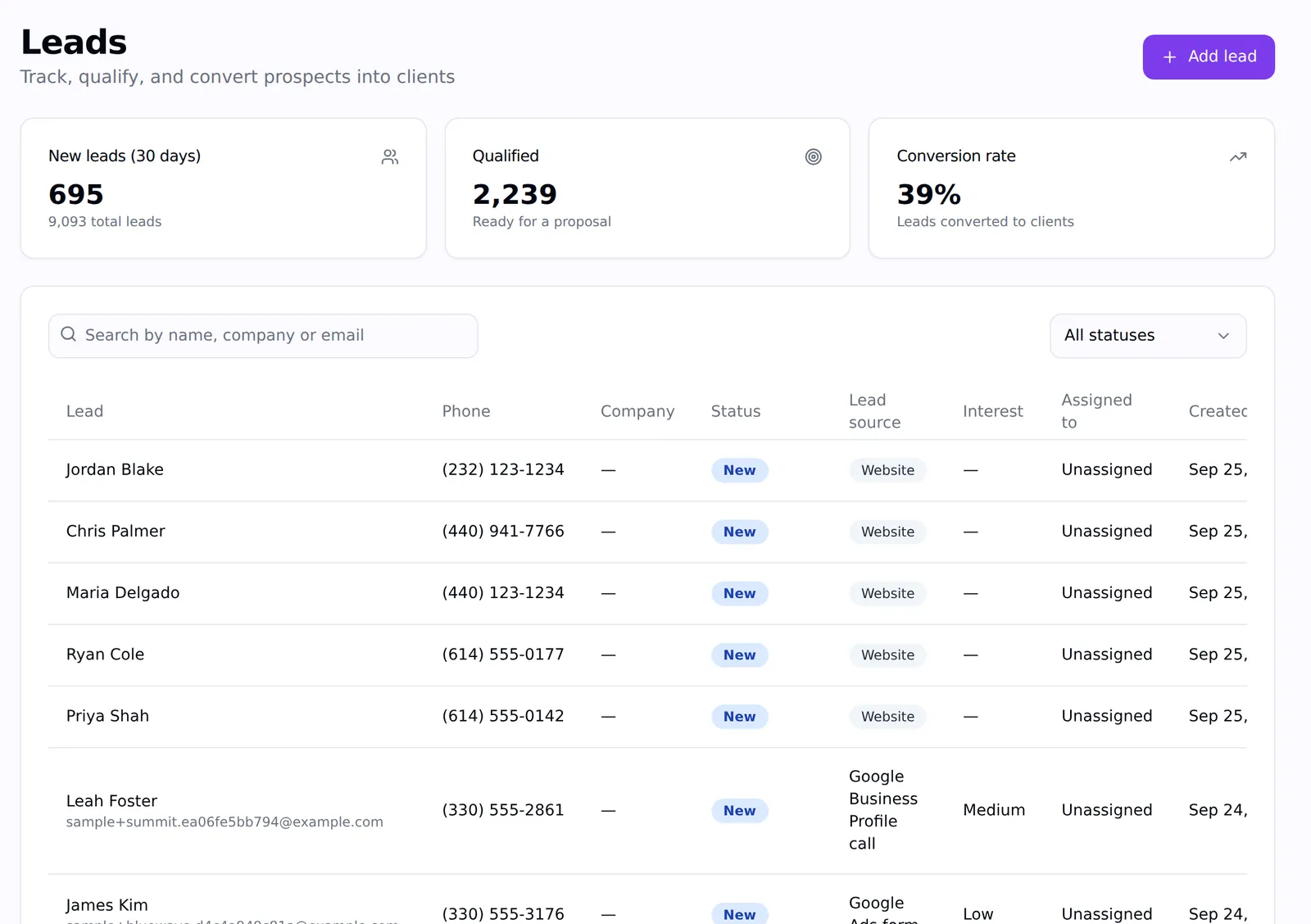
The documented pipeline uses fixed stages: New, Contacted, Qualified, Converted and Lost. Map the client's working process to those stages and use notes for the detail needed between them. If a client requires a highly specialized sales process, evaluate that requirement explicitly rather than promising custom stages on this page.
How should I handle an enquiry outside the service area?
Record the reason it is unsuitable so the agency can investigate whether location targeting, website wording or the customer's understanding contributed. One enquiry does not prove a campaign-wide problem. Repeated examples with clear notes give the team a stronger basis for changing the offer, targeting or explanation of the territory served.
Should an existing customer's new request be ignored?
No. It may represent valuable repeat work even though it is not new-customer acquisition. Record the commercial outcome accurately and consider it separately when discussing the campaign's ability to win new customers. Keeping repeat business visible helps explain customer value without overstating how many new relationships the marketing created.
What if the same person submits a form more than once?
The documented capture workflow merges repeat submissions within half an hour. Review the resulting record before assuming multiple submissions represent separate prospects. When evaluating volume, pay attention to the actual person and request; repeated attempts may reflect a form experience problem, uncertainty about receipt or a genuine follow-up message.
How can I tell whether a lead-quality complaint is actionable?
Ask for representative records and the specific reason each was unsuitable. A pattern such as requests for an unoffered service can lead to a concrete change. A general impression without reviewed outcomes is harder to investigate. Use source details and client notes together so the discussion connects marketing context with the actual sales conversation.
What information helps the agency investigate a poor lead?
The requested service, the reason it was unsuitable, the source or campaign, and a brief account of the contact attempt are usually useful. Keep the note factual. The agency can then compare the enquiry with the landing page and targeting rather than inferring quality from an unanswered phone call or a short message alone.
Does changing a lead to Converted record its revenue?
Treat lead status and sales information as separate parts of a complete record. Update the stage to reflect the agreed outcome and record the sale with its appropriate value and state. Revenue reporting depends on recorded sales, so a converted label alone should not be presented as proof of a specific amount earned.
How should lost leads be discussed with a client?
Review the reasons in context: unsuitable service, unavailable timing, price, lack of contact or a competitor chosen. Some causes suggest marketing changes; others concern sales handling or operational capacity. A respectful discussion uses examples to decide what can improve and recognizes that even relevant enquiries do not all become customers.
Can client staff manage leads from a phone?
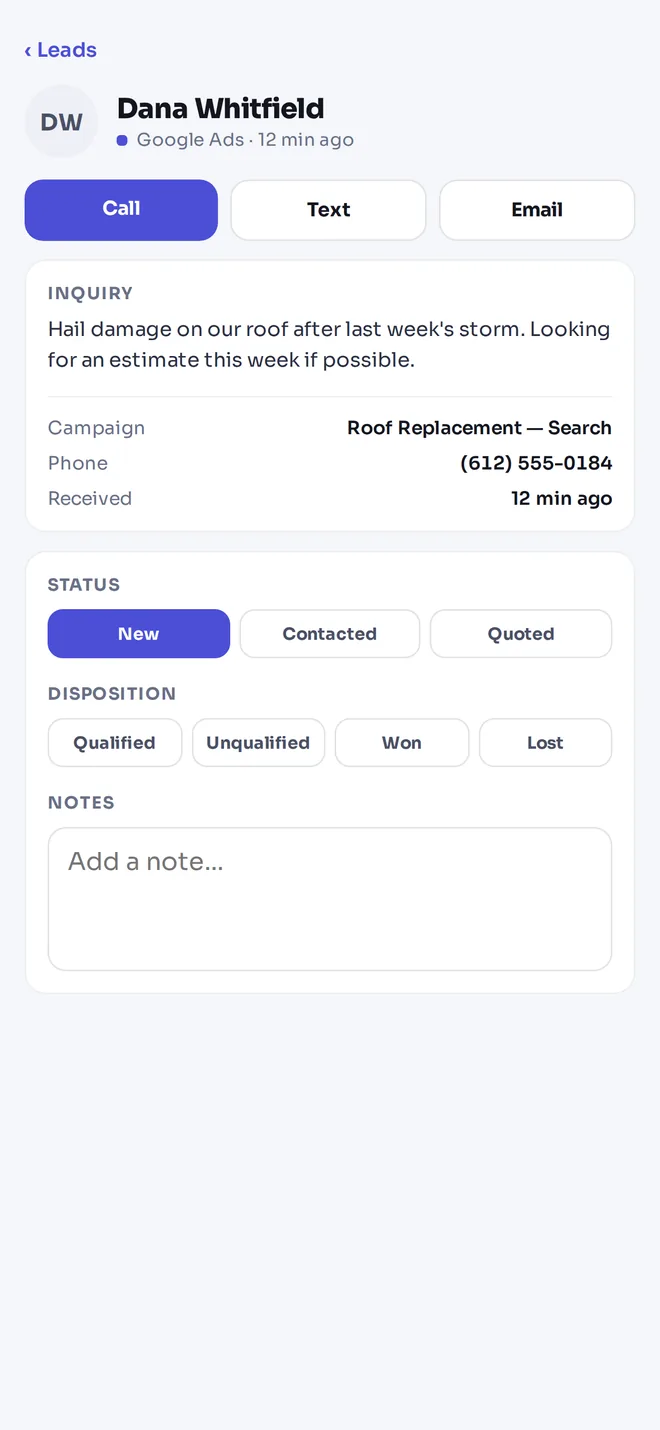
The client portal and LeadPulse app support viewing leads, updating status, adding notes and recording sales. Introduce the specific workflow during onboarding and test it with the people who will use it. Mobile access is most useful when the client knows what to update immediately after a real conversation.
Should I use lead count as the only campaign measure?
Lead count helps describe demand, but it does not establish quality or commercial return. Add the reviewed outcomes, qualified share, recorded sales and source context that are available. Explain incomplete records rather than filling the gaps with assumptions. This gives the client a more useful view of whether marketing is producing work they can serve.
How often should the agency and client review the pipeline?
Choose a cadence that matches enquiry volume and the sales cycle. Daily handling can sit alongside a less frequent joint quality review. The important point is to review while the conversations are still understandable and before the reporting meeting depends on stale statuses. Longer sales cycles also need a clear treatment of opportunities still open.
What is a sensible first-week rollout?
Test the intended capture sources, confirm the client can access the leads, explain the stage definitions and practice recording a note and sale. Review a few real enquiries together after the process begins. Fix gaps in ownership or source capture early, before the team builds its reporting expectations around incomplete or inconsistently maintained records.